
If you are searching for real estate in the DTLA Arts District, you will see the phrase "live/work loft" on almost every listing. But there is a massive difference between an open floor plan marketed as "live/work" and a property that actually possesses true, legal commercial/residential hybrid zoning.
As an Arts District real estate specialist, I help creatives, founders, and investors navigate the complexities of industrial real estate. Here is exactly what true live/work zoning means, how the Artist-in-Residence ordinance works, and why securing one of these authentic warehouse conversions is the ultimate business advantage.
The Artist-in-Residence (AIR) Ordinance Explained
True live/work zoning in Los Angeles was born from the Artist-in-Residence (AIR) ordinance in the early 1980s. The city needed a way to allow artists to legally live inside the abandoned commercial and industrial manufacturing buildings they were using as studios.
Today, this zoning designation allows you to legally operate a commercial business, studio, or tech startup out of your primary residence. Unlike standard residential condos in South Park where running a business with foot traffic violates the HOA, an authentic Arts District live/work loft encourages it.
The Business Advantage of Hybrid Zoning
Purchasing an authentic live/work loft offers incredible leverage for entrepreneurs.
Tax Write-Offs: Because the space is legally zoned for commercial use, business owners can often write off a significantly larger portion of their mortgage, utilities, and property taxes as business expenses compared to a standard home office. (Always consult a CPA for your specific tax strategy).
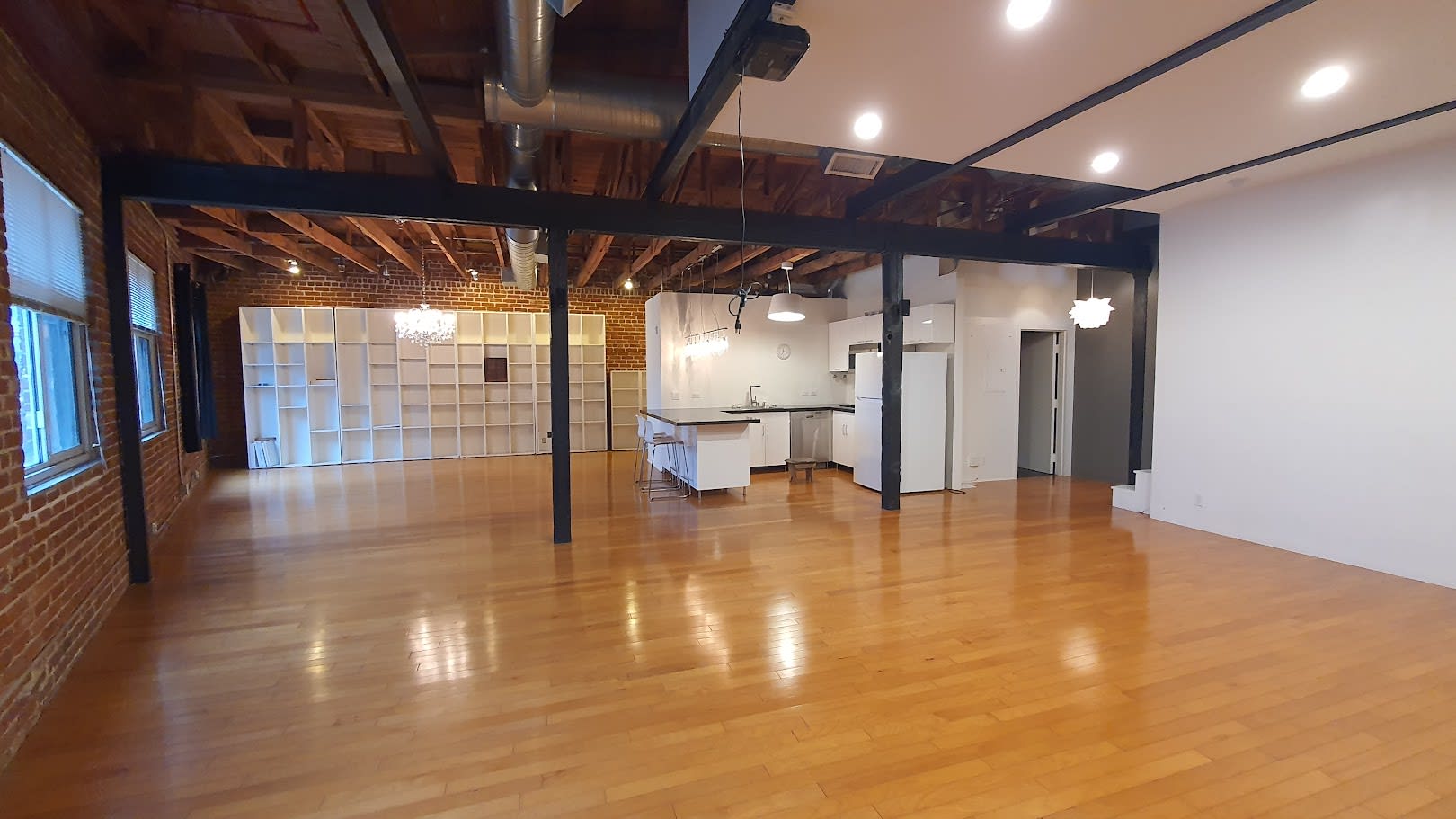
Commercial Utility: These buildings were designed for heavy industry. This means you gain access to raw architectural utilities that modern buildings simply don't have: reinforced poured concrete floors, heavy freight elevators, commercial-grade power drops, and roll-up doors for loading.
Spotting a "Fake" Live/Work Space
Many newer developments build standard apartments without walls and market them as "live/work." If a building lacks commercial corridors, freight access, and legal AIR or commercial hybrid zoning, you cannot legally run a full-scale business out of it.
If you require true commercial utility for your startup, gallery, or creative agency, you must focus exclusively on historic adaptive reuse buildings and authentic warehouse conversions.
Need a space that works as hard as you do?
Authentic live/work inventory is incredibly scarce. Browse our live, updated feed of Arts District true live/work lofts here ( https://www.laartsdistrictlofts.com/ )
Frequently Asked Questions:
What is the difference between a loft and a live/work space? A "loft" simply refers to an architectural style characterized by open floor plans, high ceilings, and industrial elements. "Live/work" is a legal zoning designation that permits commercial business operations inside a residential unit. Not all lofts are legally zoned for live/work.
Do I have to be an artist to buy an Artist-in-Residence (AIR) loft? No. While the original ordinance was created for artists, today, anyone can purchase and occupy an AIR-zoned loft. They are highly sought after by tech founders, e-commerce businesses, creative agencies, and entrepreneurs who want to legally combine their commercial office and residential space.